
📘 PRC 3 · Business and Economic Insights — Chapter 2
Learn Demand, Supply & Market Equilibrium the easy way
Read every topic in simple words, explore 22 colourful diagrams, play with live graphs, practise with flashcards and games — then take the exam and climb the live leaderboard.
14Lessons
22Diagrams
67Practice questions
14Students
Choose how you want to learn
Different students learn in different ways — try them all.
📖
Read lessonsComplete chapter text in easy words with examples.
🖼
See diagramsAll 22 graphs with “how to read this graph”.
🔊
ListenPress Listen on any lesson and the page reads aloud.
🃏
FlashcardsFlip cards for all key terms and MCQs.
🧩
Match gameMatch each term to its meaning against the clock.
📈
Graph LabMove the curves yourself and watch the price change.
🔀
Shift SimulatorPredict price & quantity for real-life events.
✎
Quizzes & exam41 MCQs, true/false and topic practice.
Lessons
See all →
A
Key Terms to Know Before StudyingLearn these words first — the chapter will become very easy
Start
Introduction & How to StudyThe whole chapter in two lines
1
Market EnvironmentWhere buyers and sellers meet
2
Demand & the Law of DemandWhat buyers want — and can pay for
2
Market Demand & ExceptionsAdding buyers sideways — and when the law fails
2.2
Movement Along vs Shift of the Demand CurveThe most important (and most confusing) idea of the chapter
3
Supply & the Law of SupplyWhat sellers offer for sale
4
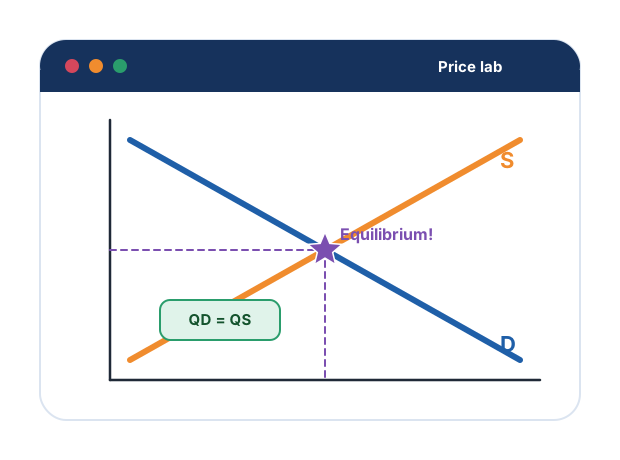
Price Determination & Market EquilibriumHow demand and supply decide the price
5
Shifts in Demand & SupplyWhat happens to equilibrium when things change
5.1
Perishable vs Durable Goods, Reservation Price & Price InstabilityWhy some prices jump around and when markets fail
6
Government Policies for Price StabilityBuffer stock, price floor and price ceiling
★
Sticky Notes & One-Page Cheat SheetQuick revision before the exam
7
E-Business and Market PriceHow online shopping changes prices
Chapter 1
Nature of Business
The chapter in 2 lines
Big question: How is the price of something decided, and why does it change?
Answer: Buyers (demand) and sellers (supply) pull against each other. Where they agree is the price. When anything changes for buyers or sellers, the price moves.