
A market is any place, system, or arrangement that brings buyers and sellers together so that they can decide prices and quantities.
A market is not only a physical place. When you order something on your phone, you are also in a market — you never meet the seller, but you still trade. Some markets are personal (you go to the bazaar and talk to the shopkeeper) and some are virtual (online, maybe in another country).
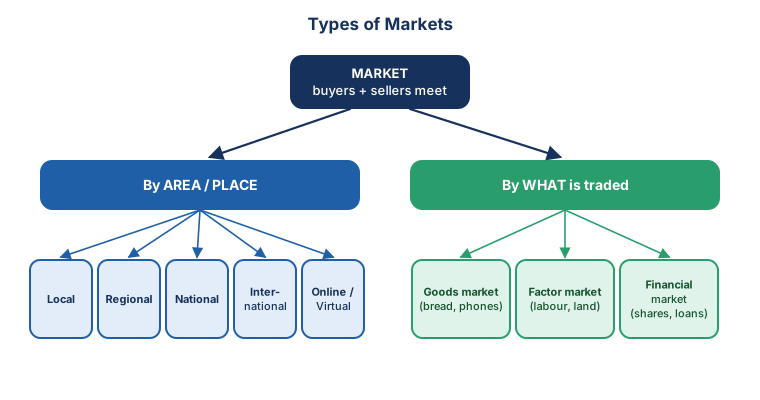
The top box is the general idea of a market. It splits into two ways of grouping markets:
Blue side (by area): how far the market spreads — from your local area to the whole world, or online.
Green side (by what is traded): goods market (finished products), factor market (land, labour, capital — the things used to produce) and financial market (money, shares, loans).
Types of markets
| Type | Easy meaning | Example |
|---|---|---|
| Local market | Buyers and sellers from one small area | Sunday bazaar, local vegetable market |
| Regional market | Covers a region/province | Sindh's wholesale grain market |
| National market | Whole country | Car market in Pakistan |
| International market | Between countries | Oil, cotton, gold markets |
| Online / virtual market | Through the internet; buyer and seller may never meet | Daraz, OLX, Amazon |
| Goods market | Final goods and services are traded | Clothes, food, phones |
| Factor (resource) market | Factors of production are traded | Labour (jobs), land for rent |
| Financial market | Money and financial assets traded | Pakistan Stock Exchange, banks |
In this chapter we study a market with many buyers and many sellers (lots of competition). In such a market, no single person can control the price — the price is decided by demand and supply together.